
Tile Damage at the Pool’s Waterline
Waterline Tile Replacement in St. Augustine
Cracked, missing, and loose tiles along the waterline are the most visible indicators that a pool’s finish and perimeter have aged past routine upkeep. The waterline is the most chemically and physically demanding zone of the pool—mineral deposits accumulate there through evaporation, tiles remain in constant contact with water and air at the surface layer, and bond failure progresses faster here than on fully submerged sections. Village Pool & Patio performs waterline tile replacement for homeowners in St. Augustine who need to address failing or outdated tile at this zone, and begins each evaluation by distinguishing replacement from cleaning. Scale, calcium deposits, and mineral staining are common at the waterline and removable through cleaning. Cracked, hollow-sounding, or displaced tiles—and tiles that have shifted or already fallen—require replacement.
When tile removal is necessary, the work includes inspecting the substrate beneath it. The bond surface at the waterline is exposed to the same chemical environment as the tile itself; if it has softened, cracked, or delaminated, new tile set over it follows the same failure path as the material being removed. Village Pool & Patio inspects substrate condition during removal and identifies whether additional work—such as skimmer replacement and beam repair—is needed before new tile is installed.
Request a tile assessment with Village Pool & Patio to determine whether cleaning or replacement is the appropriate next step for your waterline.
What Waterline Tile Replacement Actually Accomplishes
Pool-rated tile is required for waterline applications—products tested for adhesion in conditions involving chemical exposure, temperature fluctuation, and constant surface-water contact. Standard residential or commercial tile is not appropriate for this environment and is not what Village Pool & Patio uses for pool waterline work. Tile selection involves coordinating color, pattern, and profile with the pool’s existing coping and interior finish, or with new materials if resurfacing or coping work is planned at the same time. Those decisions are made with the homeowner before removal begins so that material coordination is built into the project scope from the start.
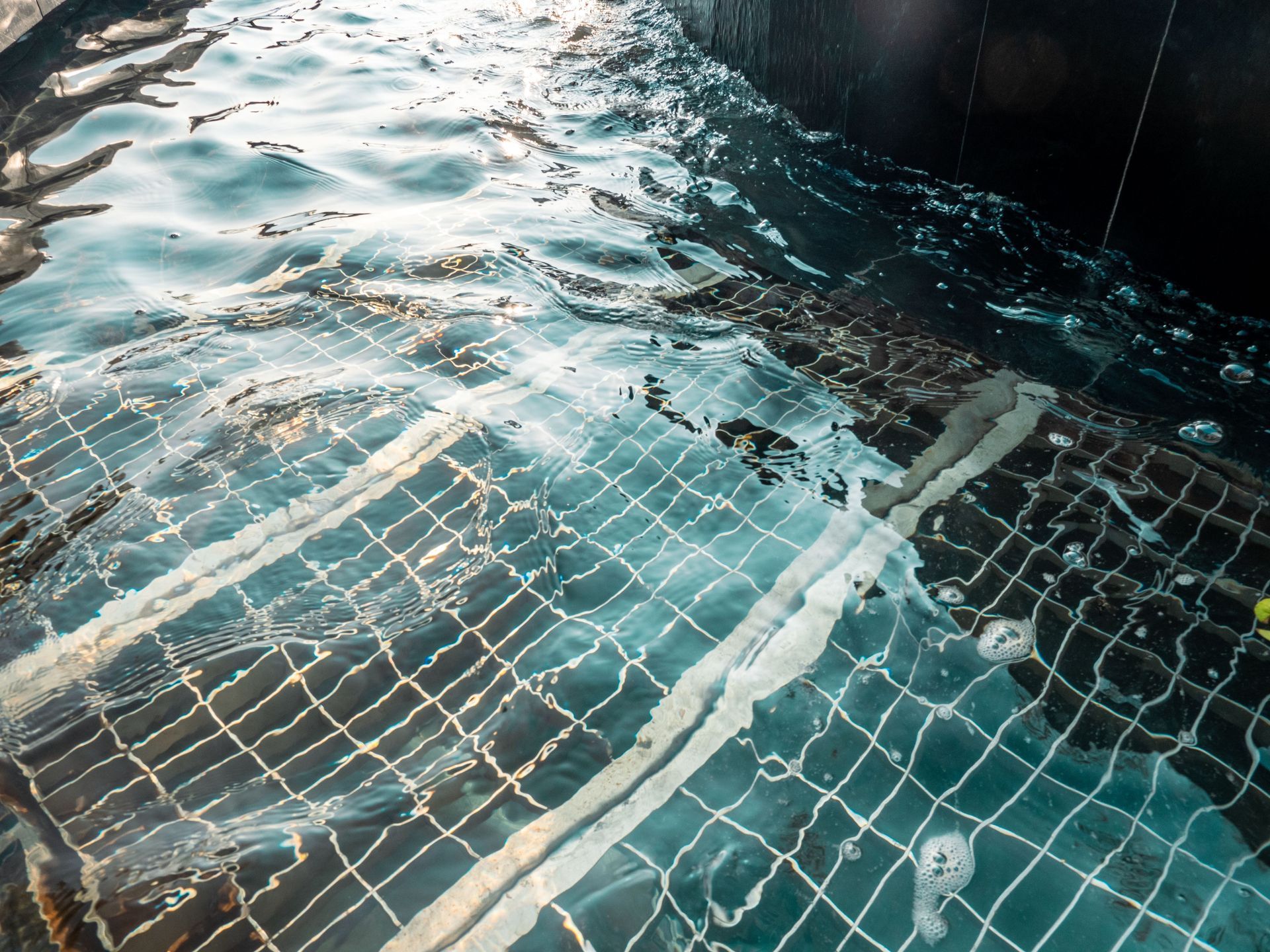
After installation, grout joints are finished to a consistent depth and the tile is inspected for even setting across the full waterline run. A properly installed waterline reflects uniformly along the bond line, with no raised edges, uneven joints, or sections where individual tiles are angled out of plane. Tiles that are set correctly and bonded to a sound substrate stay in place through normal pool operation and water chemistry cycles without recurring displacement.
Coordinating waterline tile replacement with pool interior resurfacing is practical when both are on the schedule, since the pool must be drained for either job and the finished appearance of tile and interior surface should be selected together. Tile replacement alone does not resolve structural issues or leaks; conditions of that kind require a separate evaluation through pool repair services.
Questions About Waterline Tile Work
Homeowners dealing with waterline tile issues often need to know whether the problem is confined to the finish surface or indicates something in the structure below.
Q: How do I know whether waterline tile needs replacement or just cleaning?
A: Tap gently along the tile row—a hollow sound indicates the tile has separated from the substrate and is a candidate for replacement. Tiles that are firmly bonded but stained or discolored are more likely to respond to tile-safe cleaning without removal.
Q: What type of tile is used for waterline replacement?
A: Waterline applications require pool-rated tile—products tested for adhesion under chemical exposure and temperature change. Standard residential tile is not designed for the conditions present at the waterline and is not appropriate for pool installation.
Q: Why does substrate inspection matter during waterline tile removal?
A: The bond surface beneath waterline tile degrades from the same chemical exposure as the tile itself. If that surface has softened, cracked, or delaminated, new tile set over it fails in the same areas. Identifying and correcting the substrate during removal is part of a durable installation, not a separate add-on.
Village Pool & Patio is available to assess your waterline tile, discuss material options, and explain what removal, substrate inspection, and installation would involve for your specific pool configuration.