When Pool Surfaces Start Showing Their Age
Pool Interior Resurfacing in St. Augustine
Village Pool & Patio performs pool interior resurfacing with pebble and quartz finishes for homeowners in St. Augustine whose pool shells have degraded past the point where maintenance can restore the surface. The signs are specific and observable: roughness that abrades skin on steps and benches, staining that holds through chemical adjustment, and visible pitting or flaking across the plaster face. When those conditions are present, resurfacing is what the pool needs—not further cleaning or water chemistry corrections.
Before resurfacing proceeds, the pool shell is evaluated for signs that go beyond finish wear. If the pool is losing water, or if the shell shows cracks consistent with structural movement, Village Pool & Patio assesses whether a pool repair evaluation is needed before any new finish is applied. A new finish applied over an active leak treats only the surface and does not resolve what is driving the water loss.
Schedule an assessment with Village Pool & Patio to review your pool’s current surface condition and discuss finish options..
Pebble and Quartz—What Each Finish Involves
Resurfacing starts with draining the pool and removing the old finish down to the structural shell. Surface preparation is where outcomes are determined: hollow spots, delamination, and areas where the existing material has lost its bond must be corrected before the new material goes down. Pebble finishes incorporate smooth river stones into a cement matrix, producing a naturally varied appearance and visible depth in the water. Quartz finishes use uniform mineral aggregate for a more consistent tone with a slightly smoother surface texture at contact points like steps and benches.
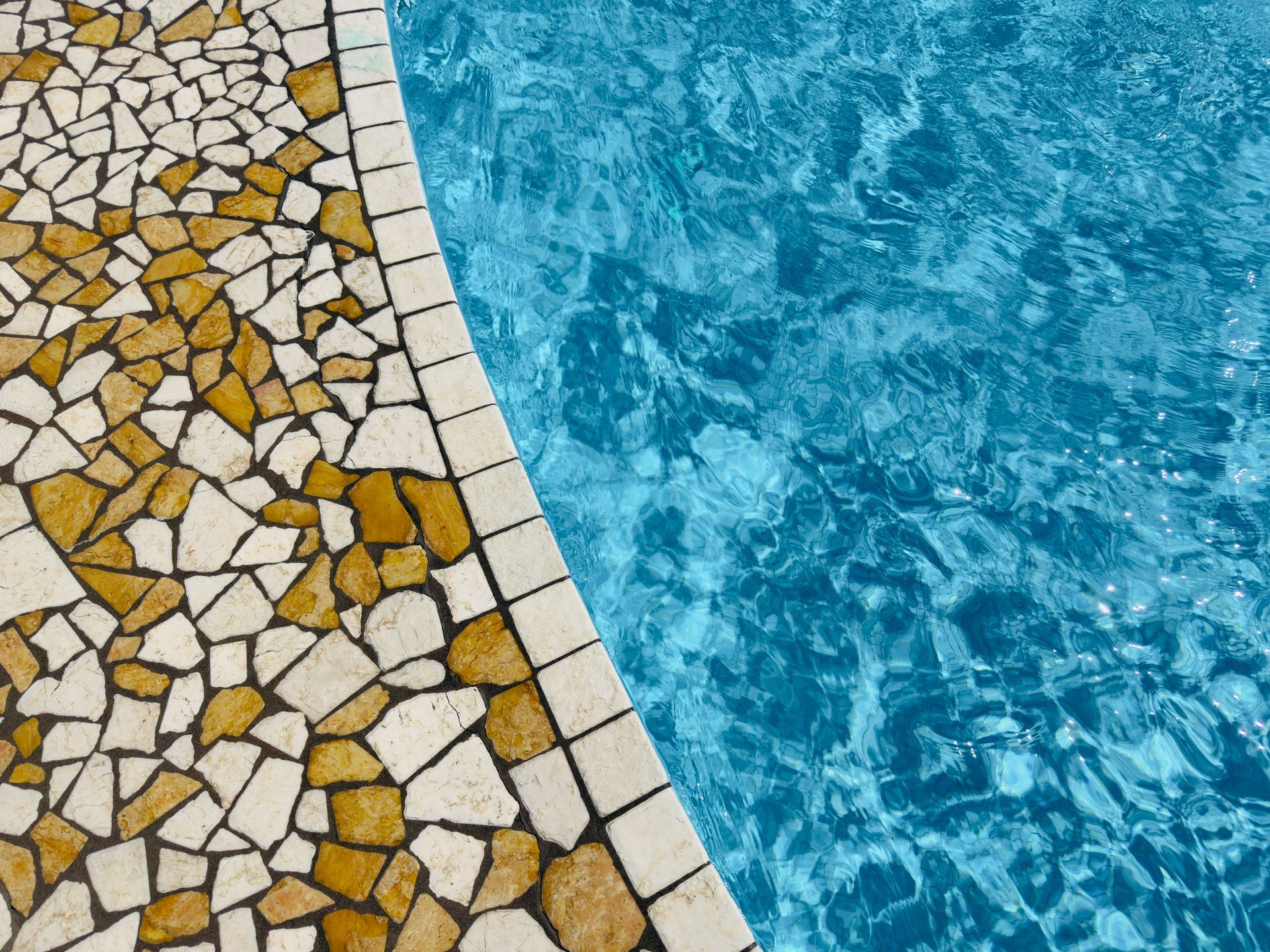
The practical difference between pebble and quartz shows up in texture, appearance, and how each material responds to water chemistry over time. Pebble finishes tend to coordinate well with natural stone coping and travertine surrounds—a combination common on St. Augustine pool properties built during the 1980s and 1990s, many of which were finished with Mediterranean-influenced materials that remain in place today. Quartz finishes integrate more cleanly with geometric tile patterns and contemporary coping profiles. After the pool refills, a startup process runs over several days: chemical additions, twice-daily brushing, and water balance monitoring condition the new finish and clear surface residue from the applied material. Village Pool & Patio manages the startup process and provides water chemistry guidance before returning the pool to regular use.
Waterline tile replacement and coping and travertine remodeling are both practical to coordinate during the same project cycle, since the pool is already drained..
Common Questions About Pool Resurfacing
Questions about pool interior resurfacing often center on what distinguishes finish wear from structural problems and how pebble and quartz materials differ in practice.
Q: What is the difference in texture between pebble and quartz finishes?
A: Pebble finishes expose natural stone aggregate at the surface, which produces a rougher feel underfoot—particularly noticeable on steps and benches. Quartz finishes use a finer aggregate that results in a smoother contact surface while still producing depth and color variation in the water.
Q: How is the pool shell evaluated before a new finish is applied?
A: After draining, the existing plaster is removed mechanically and the shell is inspected for hollow spots, delamination, and areas where the finish has separated from the structural surface. Those conditions are corrected during preparation, since a new finish applied over unbonded substrate will repeat the same failure in the same locations.
Q: Why is the startup process required after resurfacing?
A: Pebble and quartz finishes are cement-based materials that require conditioning after installation. The startup protocol—which includes daily brushing and careful chemical management over several days—removes surface residue left during the curing process and establishes the water chemistry balance the finish needs to perform correctly over time.
Village Pool & Patio is available to evaluate your pool’s interior surface and walk through finish options based on current shell condition, surrounding materials, and long-term maintenance approach. If the pool is showing signs of water loss, that evaluation should precede any resurfacing conversation—see Pool Repair for related diagnostic services.